



Femantraa
The adaptive naara nefa Cotton Dhoti Salwar - Preorder in Black !
The adaptive naara nefa Cotton Dhoti Salwar - Preorder in Black !
Couldn't load pickup availability
(Available to ship domestic USA/CA/UK)
The Philosophy & Architecture
Rooted in the structural brilliance of traditional Indian design systems, this dhoti salwar reclaims comfort without compromising on architectural elegance.
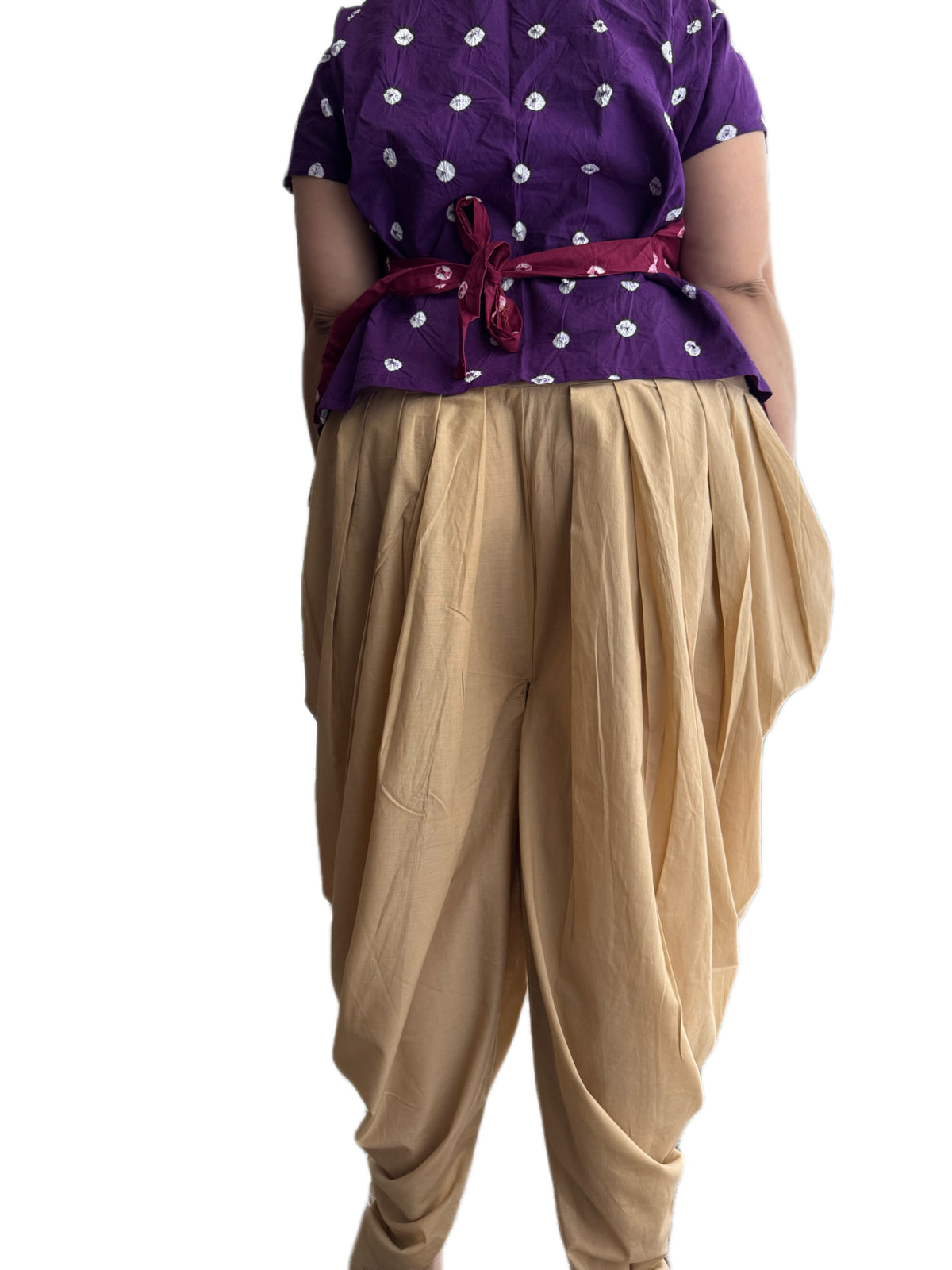
The silhouette masterfully balloons at the top through deep, deliberate pleating before tapering cleanly toward the ankles. This design creates a dynamic, functional drape that moves effortlessly with the wearer, entirely free from the restrictive grip of synthetic elastics, zippers, or metal hardware.
At the core of this garment is a commitment to body-adaptive mechanics. The waist is engineered with a classic nefa (tubular casing) and an adjustable naara (drawstring tie), allowing the salwar to adapt intuitively to your form rather than forcing your body to conform to industrialized standard sizing.
Pair with our Sandhi Kurpasaka- the modular bandhini short kurti or a handblock kurti or just with your favourite tee and throw over a jacket !
Specs:
Rise/Aasan (Waist to crotch) : 16 inches
Waist: 50 inches
Length: 44 inches
Ankle/Poncha opening : 9 inches
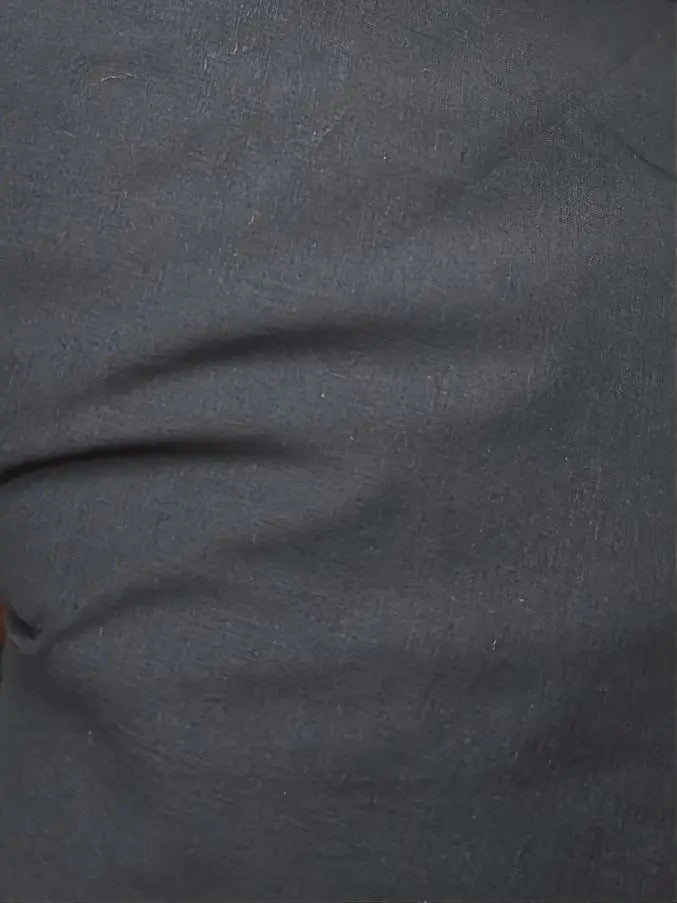
Fabric composition: 60x60 Pure Cotton in chemical free dyes
(Please note all sizes are approximate)
Handmade clothing. No zippers. No elastics. No plastics.


Collapsible content
Craft Details
Care Instructions
Shipping & Delivery
Currently, we’re only shipping to the USA, Canada,& UK but we’ll be expanding our reach within the coming months.
During the checkout process, you have the flexibility to choose your preferred shipping mode.
The delivery time and cost will depend on your location and the option you selected.
Before your product is shipped off, you are welcome to make alterations to your order as you see fit.
We do rigorous quality controls before shipping out our merchandise. But if you encounter a faulty product, contact us so we can initiate the returns procedure.
Please note that products on sale are non-refundable and non-exchangeable.
Learn more about returns, cancellations & our shipping policy here.
Return Policy
Please note the following important points regarding our sales policy. By adhering to these guidelines, we aim to maintain clarity and ensure your satisfaction with our products.
We guarantee the quality of our handcrafted garments and promptly address any issues with defective or damaged items reported within 24 hours of delivery.
We encourage thorough review of product descriptions, size details, and measurements on our website to ensure accurate purchases aligning with your expectations. We only replace/refund defective or damaged items.
Conditions for Exchanges:
• The item must be unworn, unwashed, and in its original condition.
• Proof of purchase, such as the original receipt or order confirmation, is required for all exchanges.
For any inquiries or clarification regarding our products, our team is available to assist you via WhatsApp. Please reach out to us before making a purchase to address any concerns.
If you need to exchange a defective item, please reach out to us promptly.
Contact us at hello@femantraa.com or send a message via WhatsApp to +91 8287796290 within 24 hours of receiving your order to begin the exchange process.
Radical Transparency
The True Cost of Kosha Vasas
We believe in absolute transparency. Every piece in the Kosha Vasas collection is a bespoke design, moving away from industrialized sizing to embrace zero-waste architecture and adaptive closures using the traditional dori and naara.
What’s built into the retail price:
- The Textiles: Direct compensation to the artisan clusters for authentic, hand-loomed fabrics. We bypass middlemen to ensure the master weavers and dyers are paid fairly and directly wherever possible.
- The Tailoring: Fair wages paid to the tailors and makers who bring these intricate, zero-waste silhouettes to life.
- Importation: International freight from India to our studio, alongside all customs and import duties.
- Operations: Secure payment gateway fees, packaging, handling and platform maintenance.
- Sustenance & Design: A 35% margin that sustains the business, supports the historical research behind these indigenous tying systems, and compensates for the bespoke design process.
What’s calculated at checkout:
To keep delivery fair, shipping is calculated at checkout using standardized flat rates based on the garment's weight.
🇺🇸 For US Customers: We dispatch your orders domestically using USPS Ground Advantage directly from Blaine, WA. You receive a predictable flat rate with zero cross-border hassles or international markups.
🇨🇦 For Canadian Customers: Shipped domestically via local ground services at a standardized flat rate.
🇬🇧 For UK Customers: We dispatch your orders domestically using Royal mail/Evri directly from Hampshire, UK. You receive a predictable flat rate with zero cross-border hassles or international markups.